
Dock Safety · Auxiliary Equipment
Dock and Loading Safety Systems
A product group bringing together restraint, guidance, protection and warning equipment that keeps every step under control, from vehicle approach to the end of loading.
- Category
- Dock Safety Systems
- Series and models
- 09
- Origin
- Çorlu / TR
Dock and Loading Safety Systems
Series and models
Compare the options in this product group; each one has its own page with technical details.
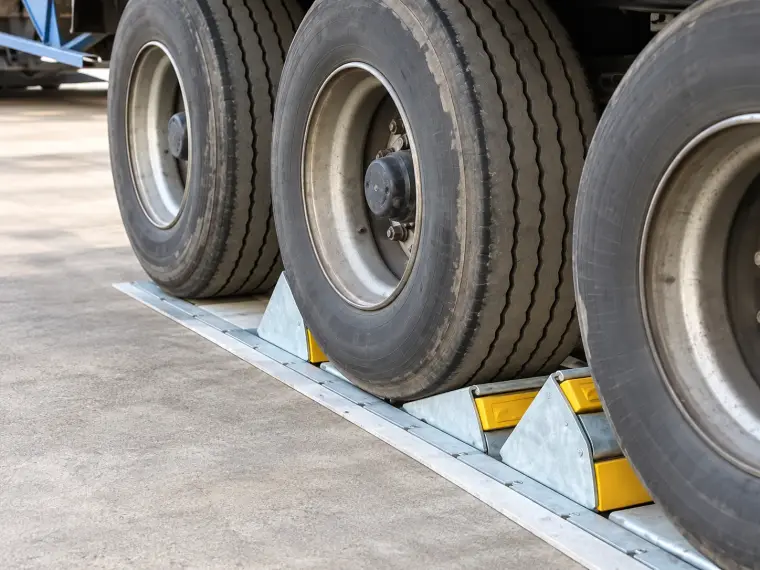
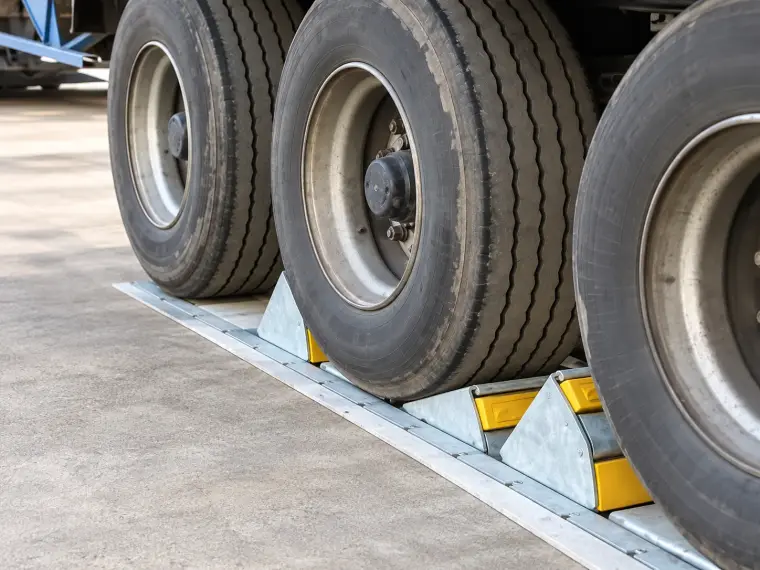
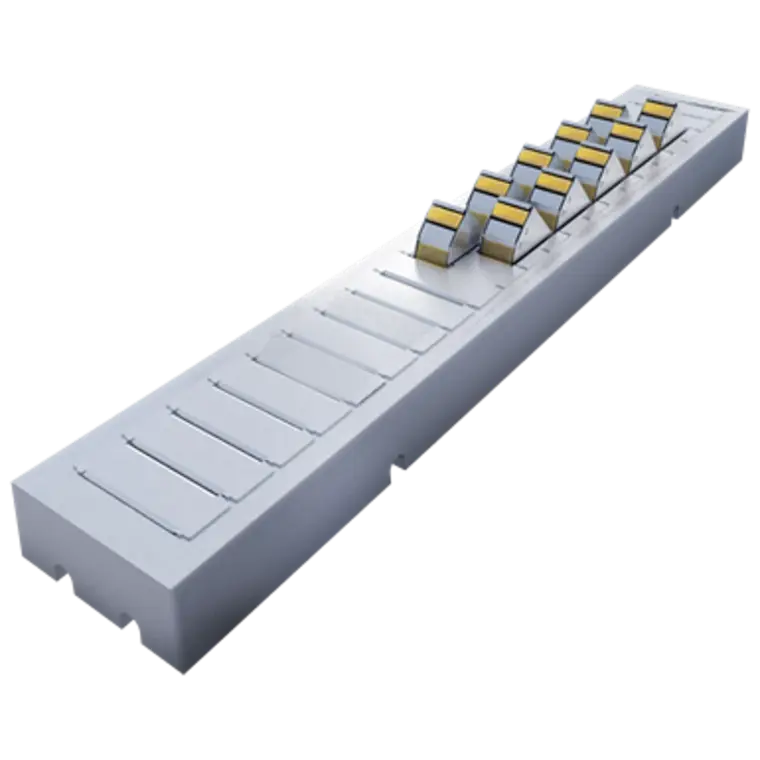
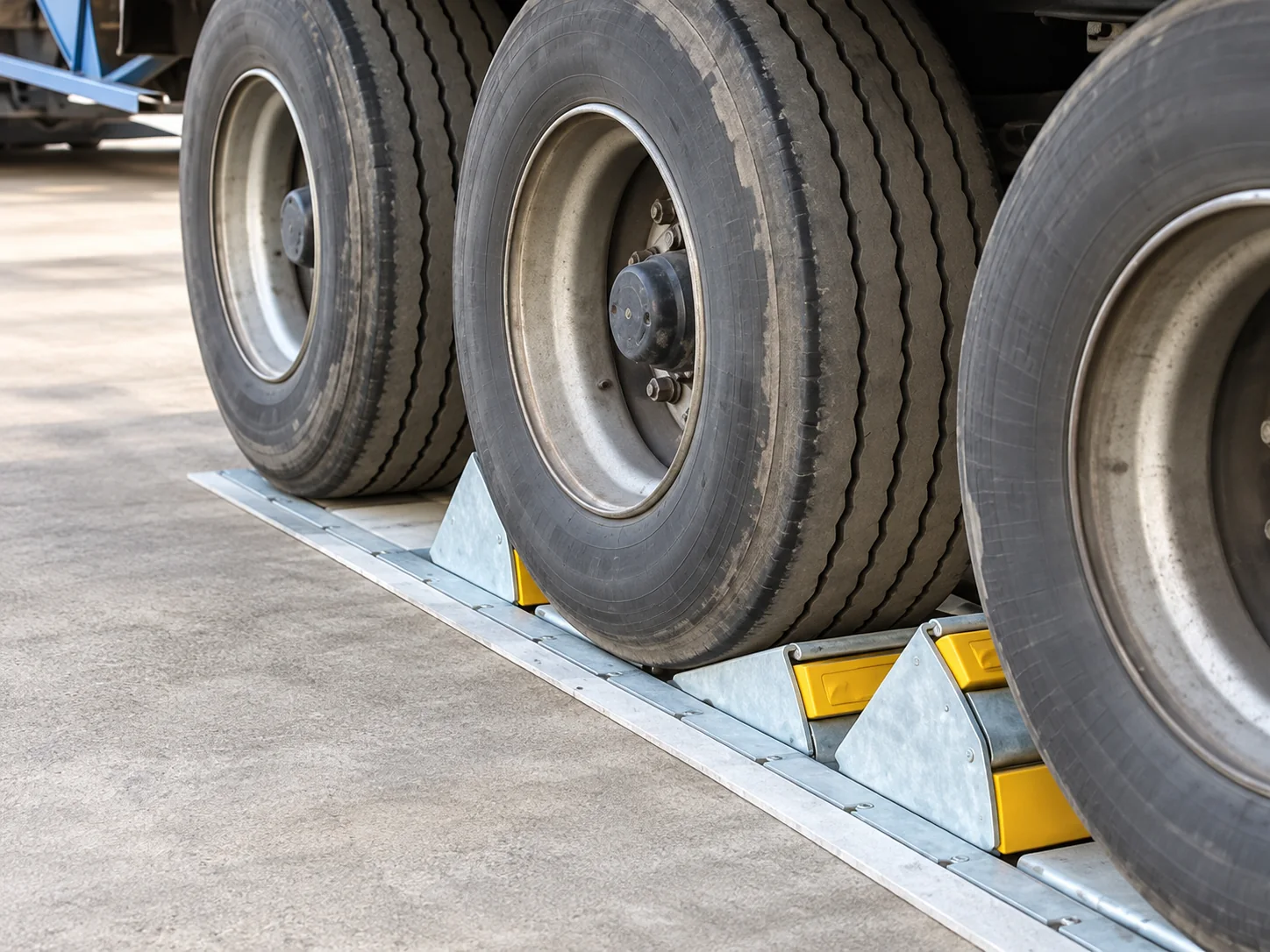
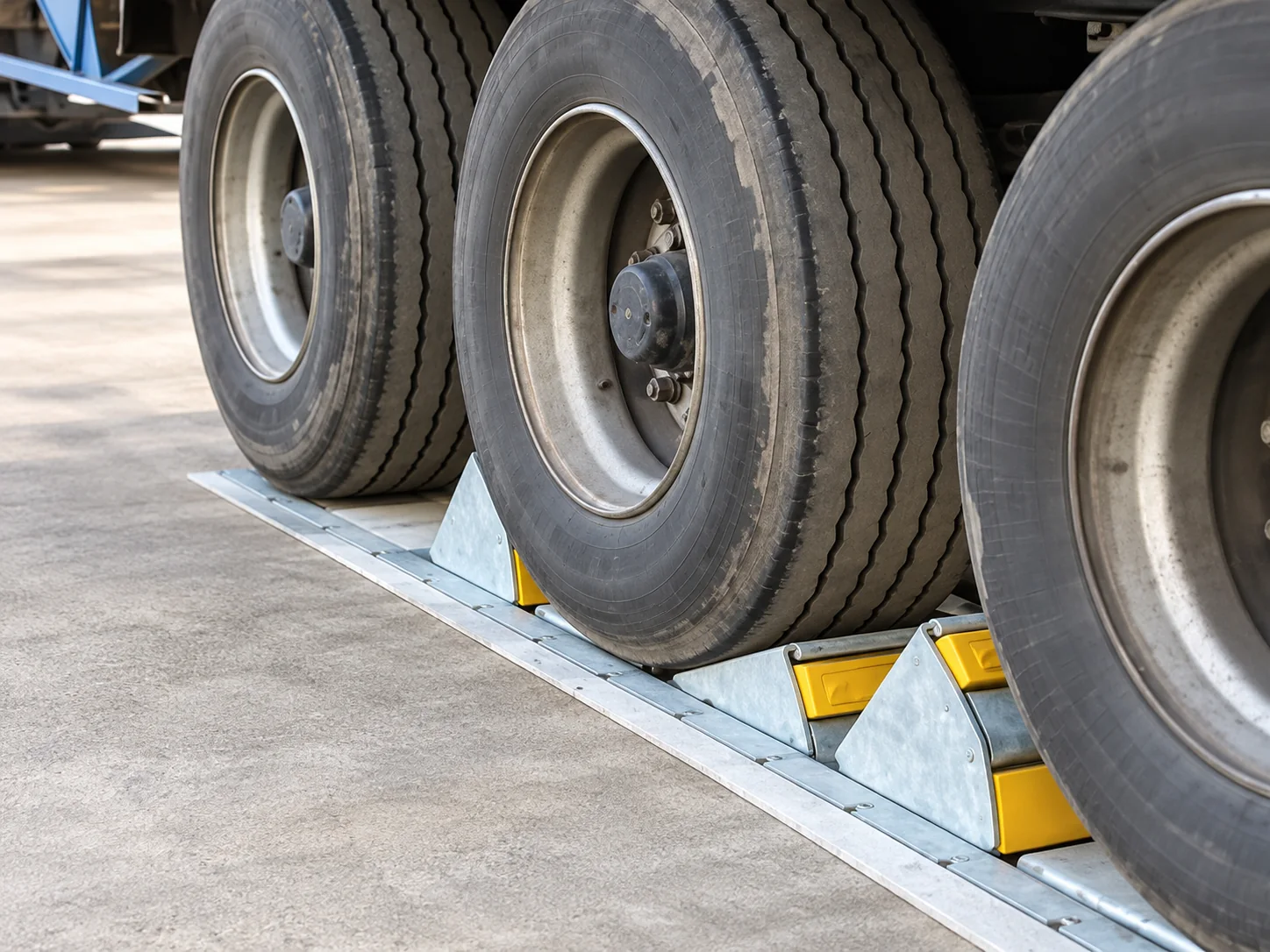 01Calematic Vehicle Restraint SystemA restraint system that blocks truck wheels with chocks raised by compressed air, keeping the vehicle in position at the dock throughout loading and able to work with the door.
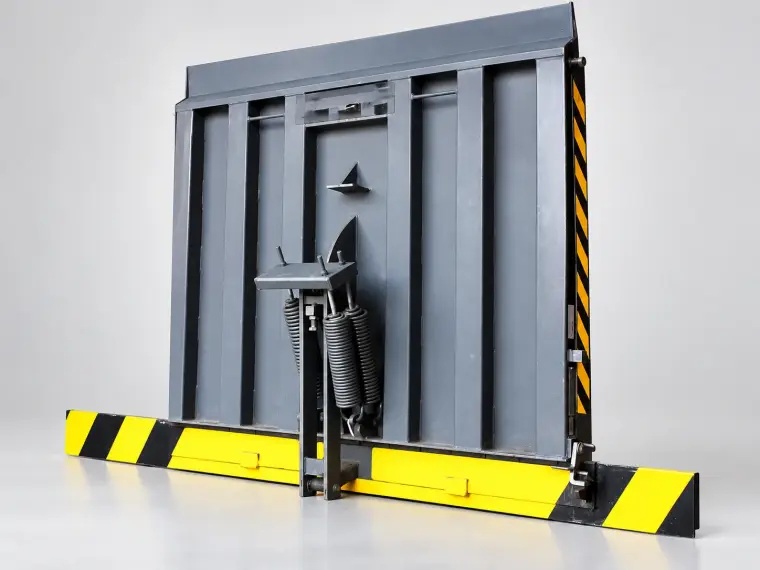
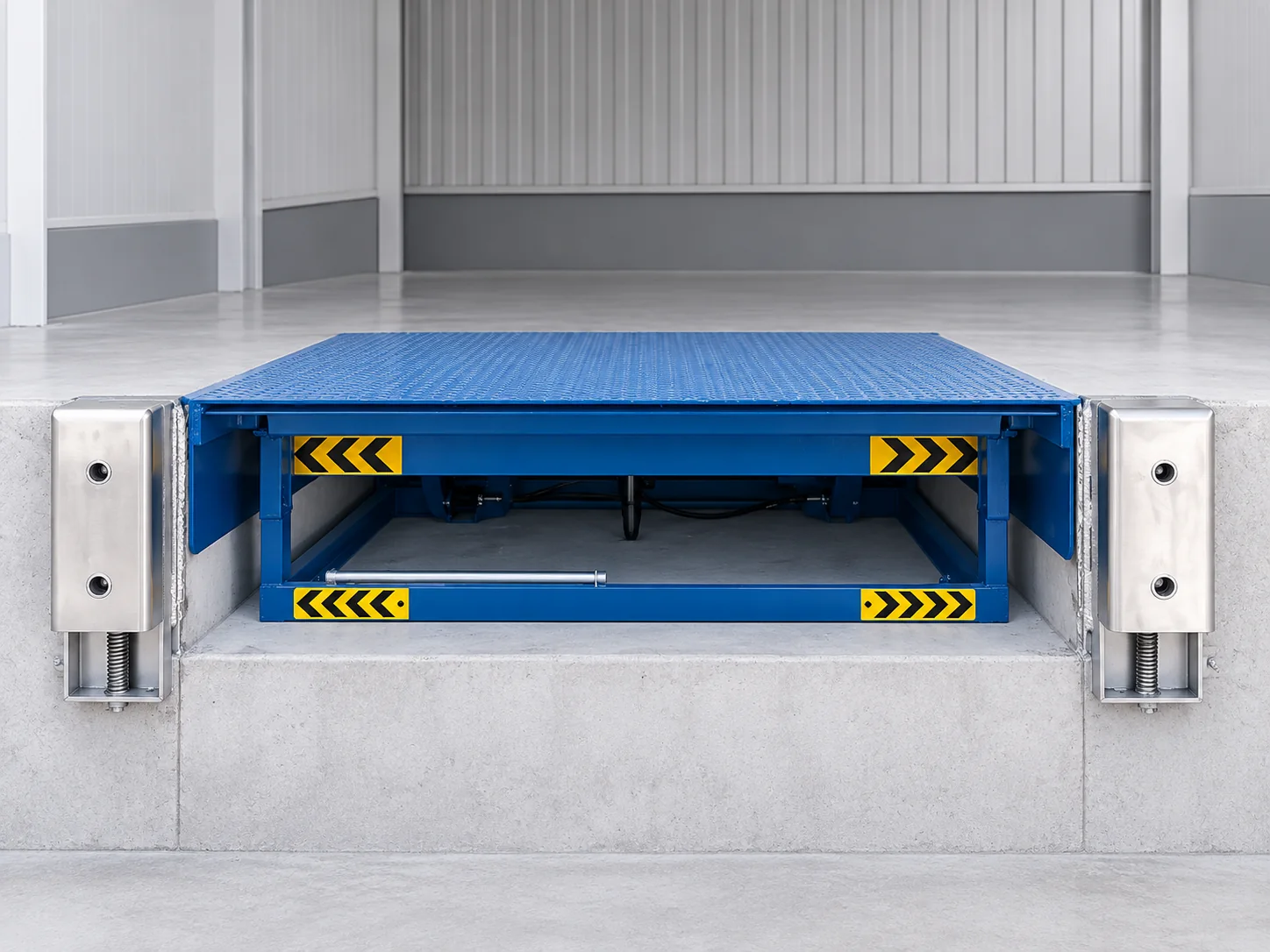 02Dock Bumpers and Impact PadsRubber and spring-loaded dock bumpers that absorb the contact load as a truck reverses to the loading point, protecting the dock edge, door surround and building facade.
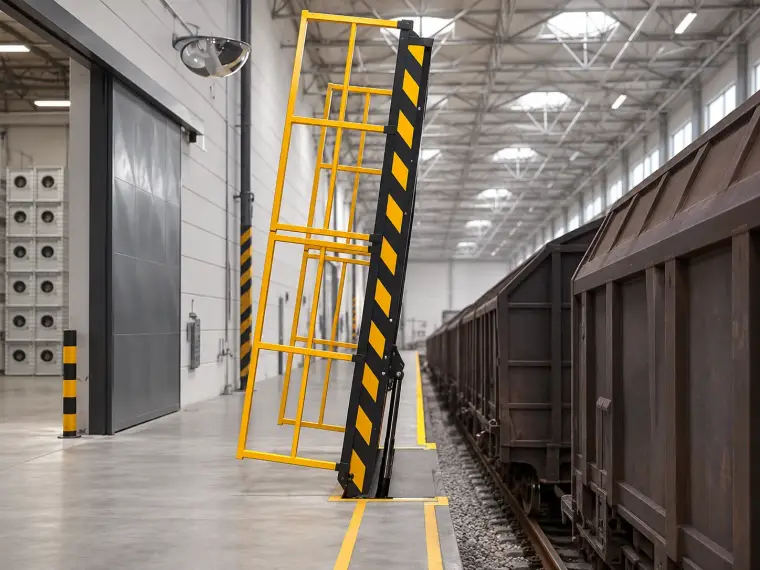
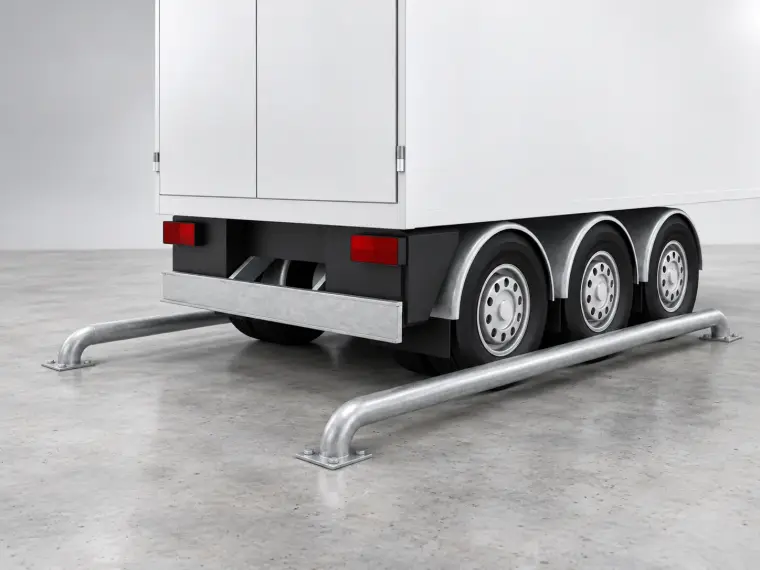
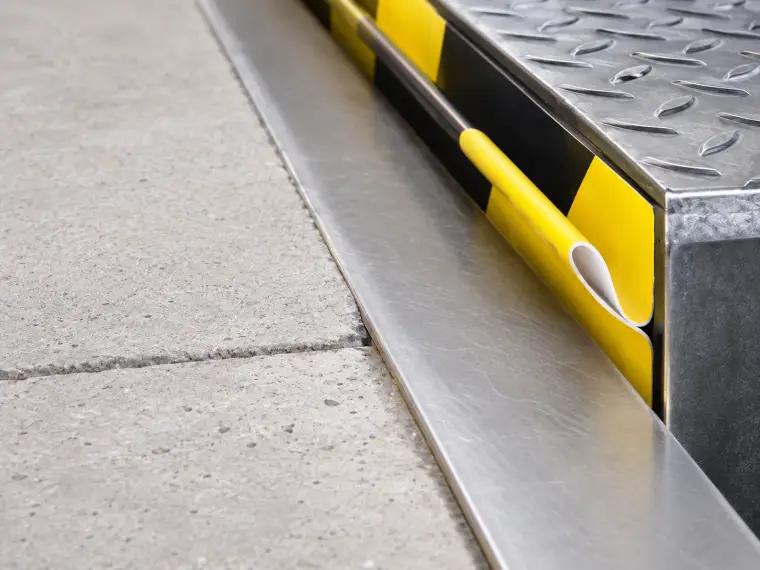
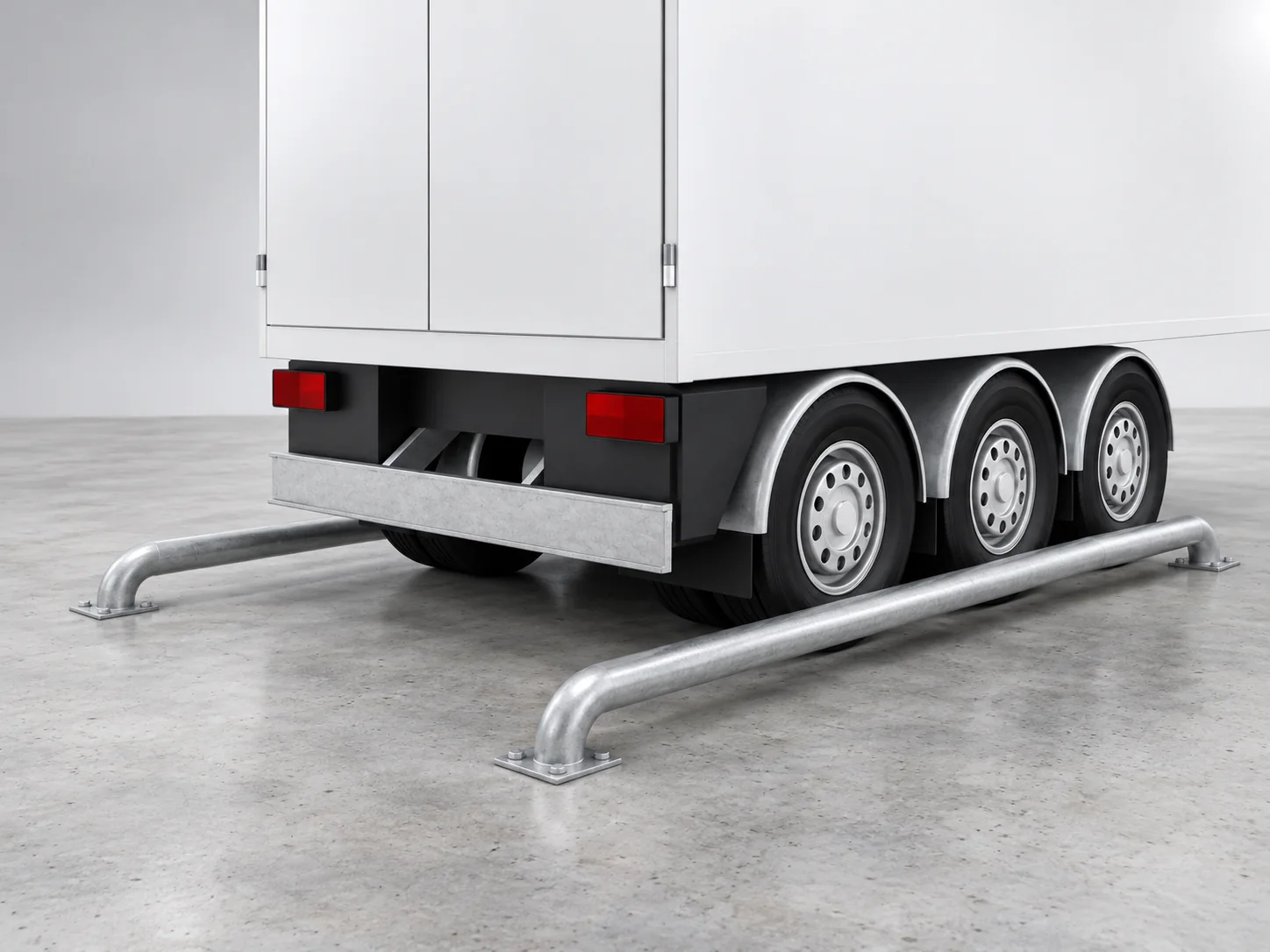 03Wheel Guides and Dock Approach RailsFloor-fixed galvanised steel wheel guidance elements that help a reversing truck reach the loading door straight and centred, without scraping the door frame or shelter.
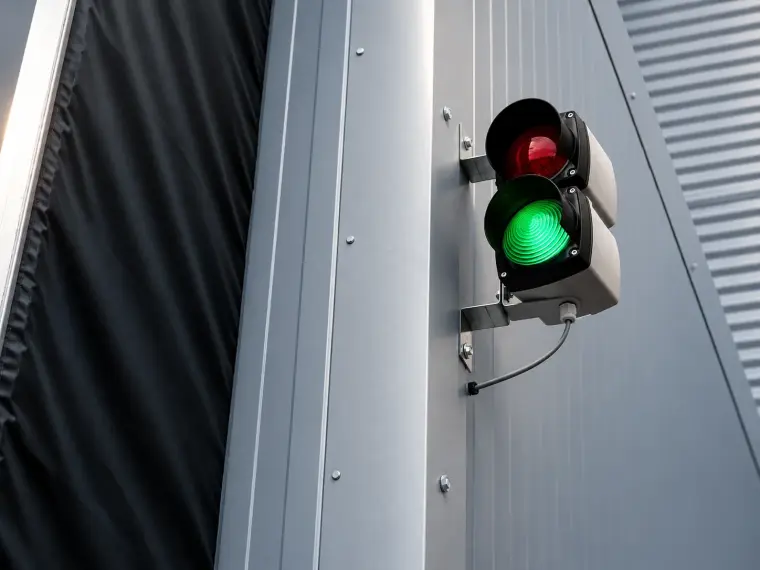
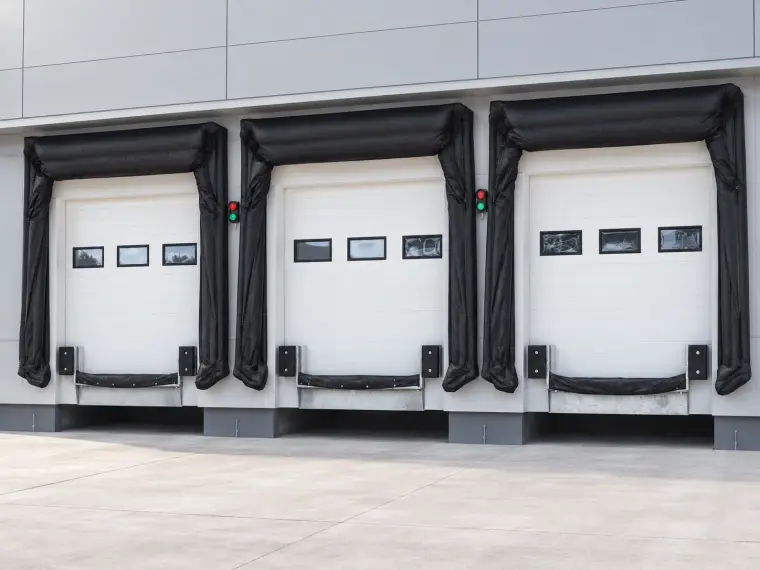
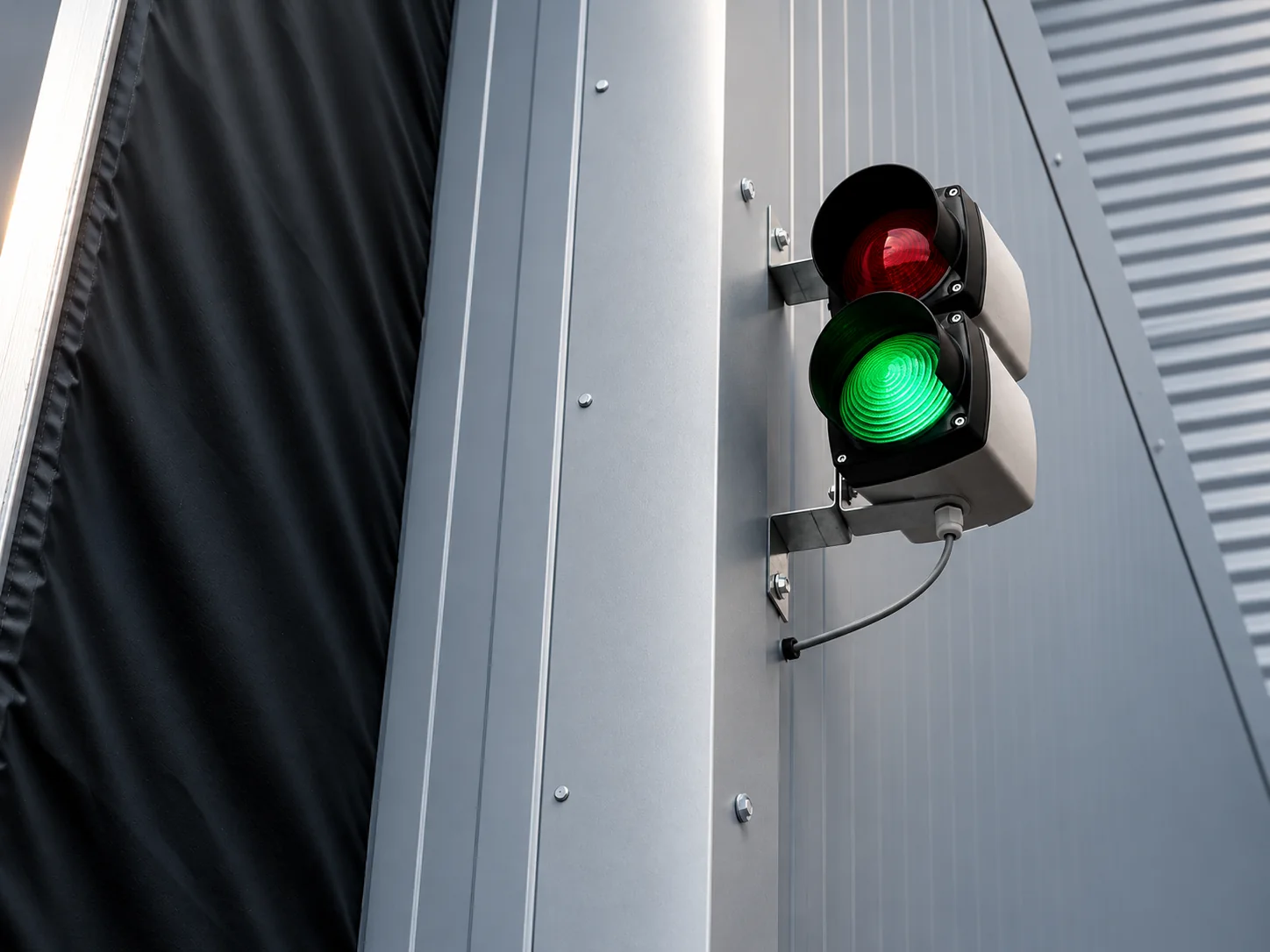 04LED Warning Lights and Loading LampsLED warning lights that tell drivers and dock staff the docking and loading status with red-green signals, together with loading lamps that light up the inside of the trailer.
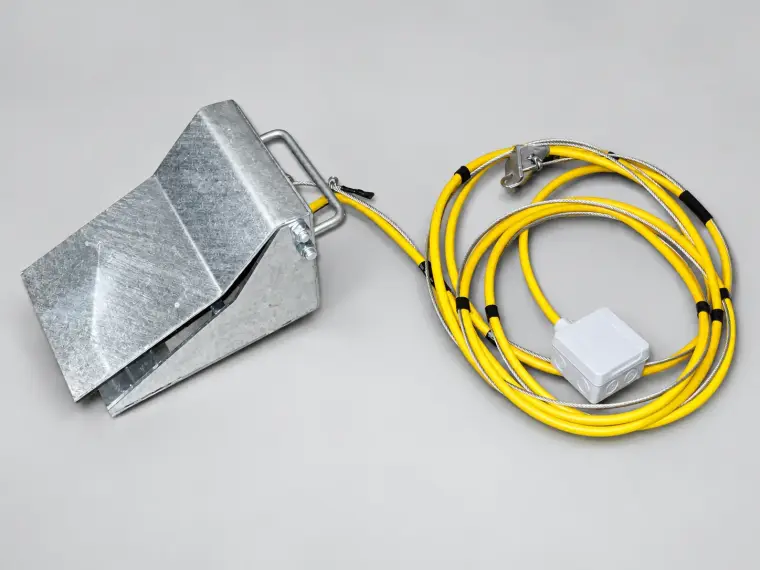
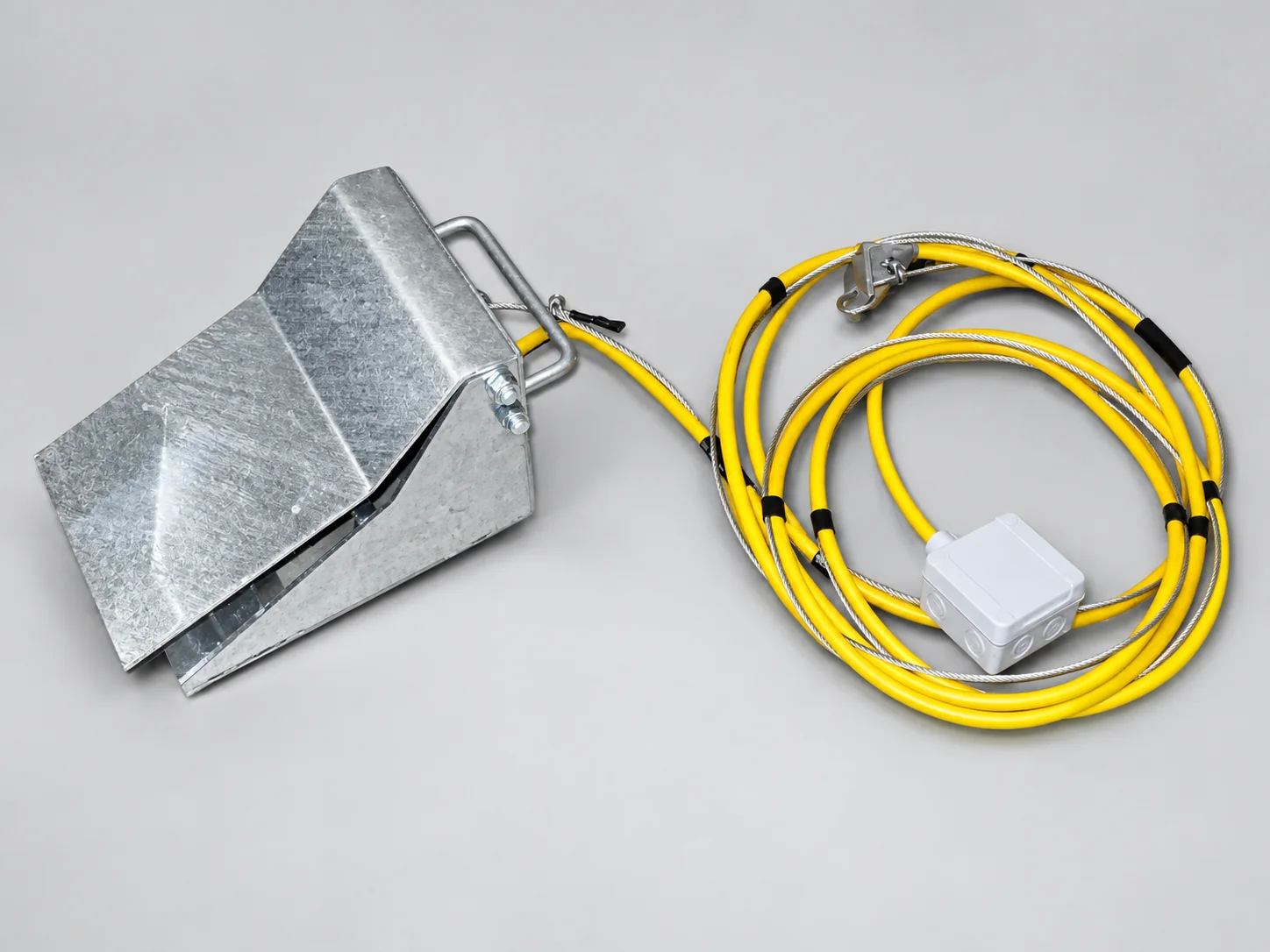 05Electronic Wheel Chock with SensorThe electronic wheel chock detects by sensor that it has been placed in front of the trailer wheel and reports this to the dock operator, adding an extra layer of control against unexpected movement of a docked vehicle.
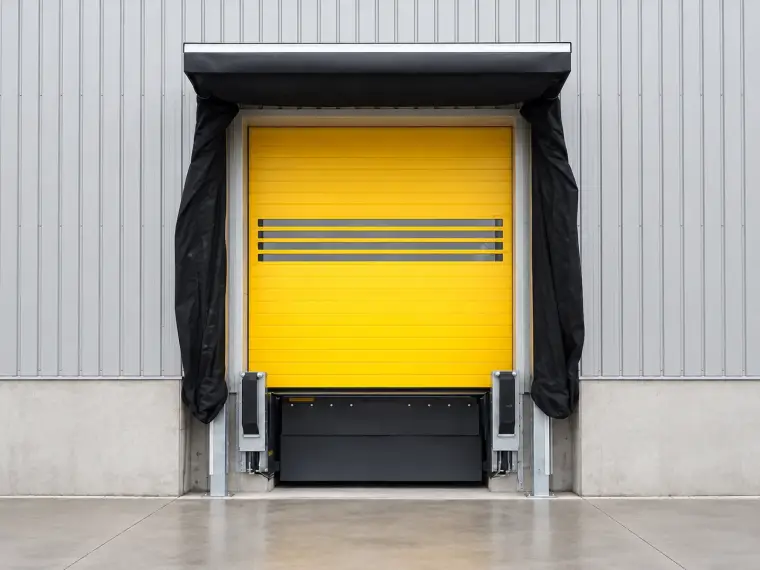
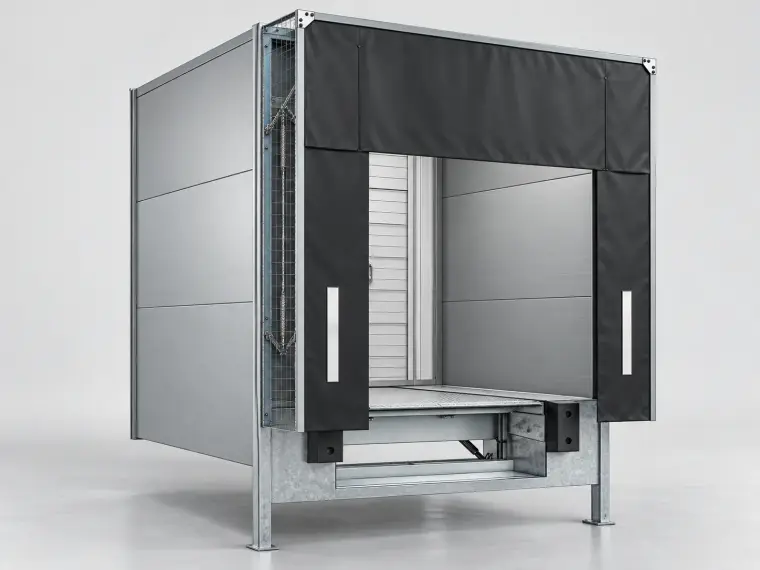
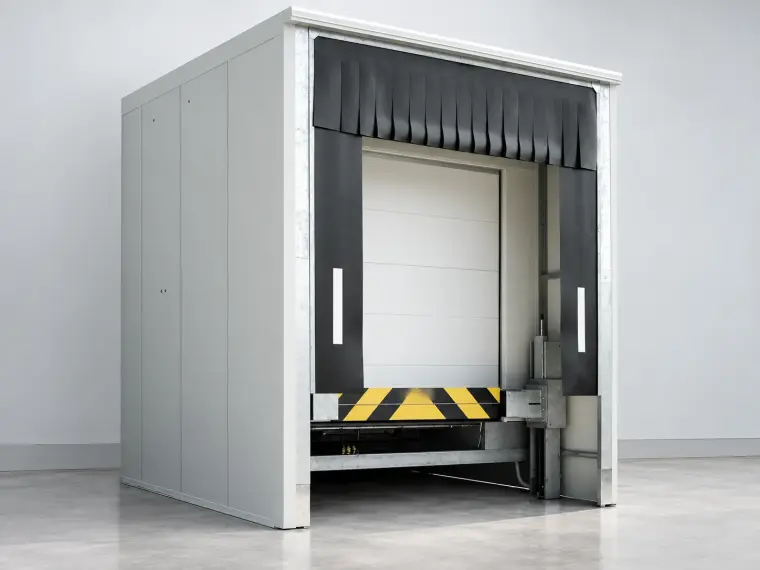
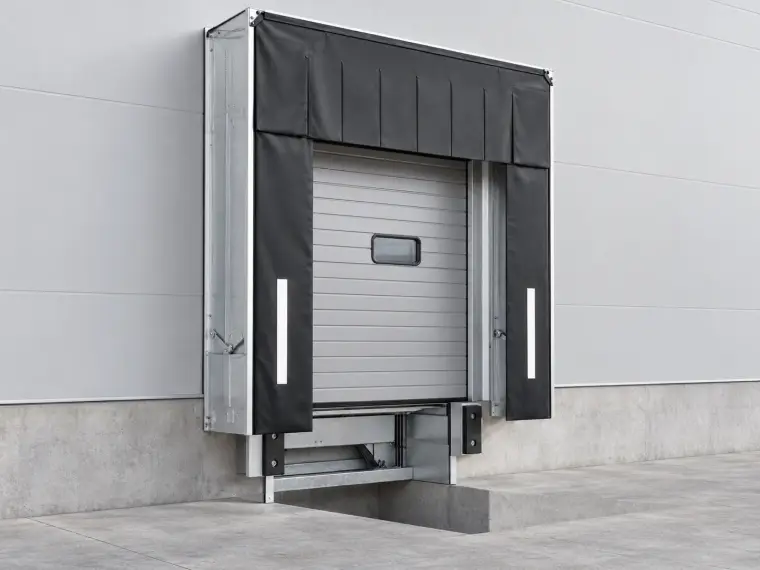
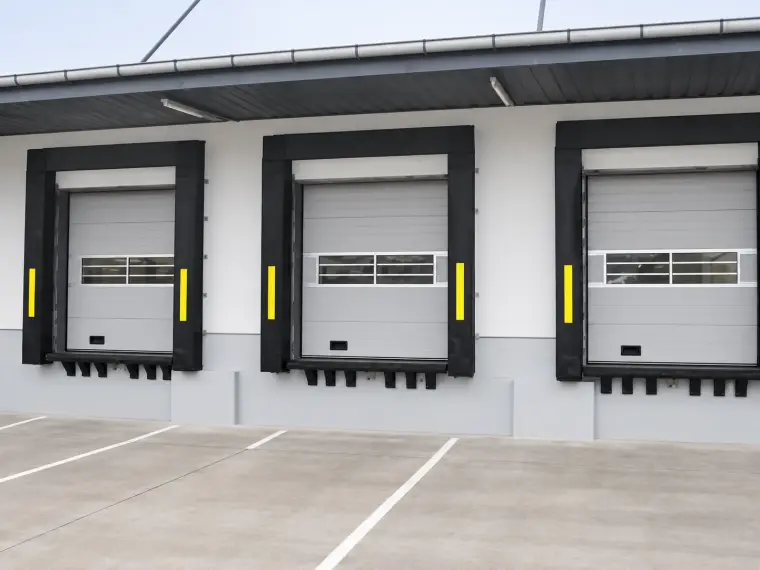
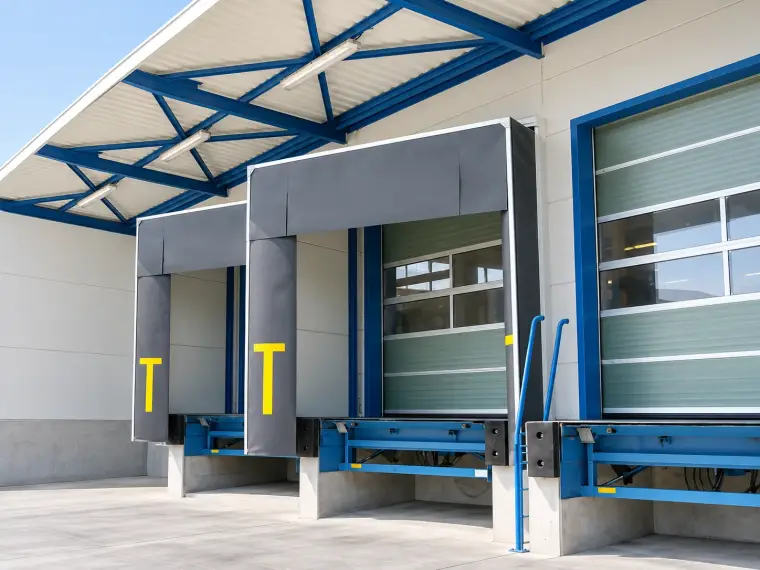
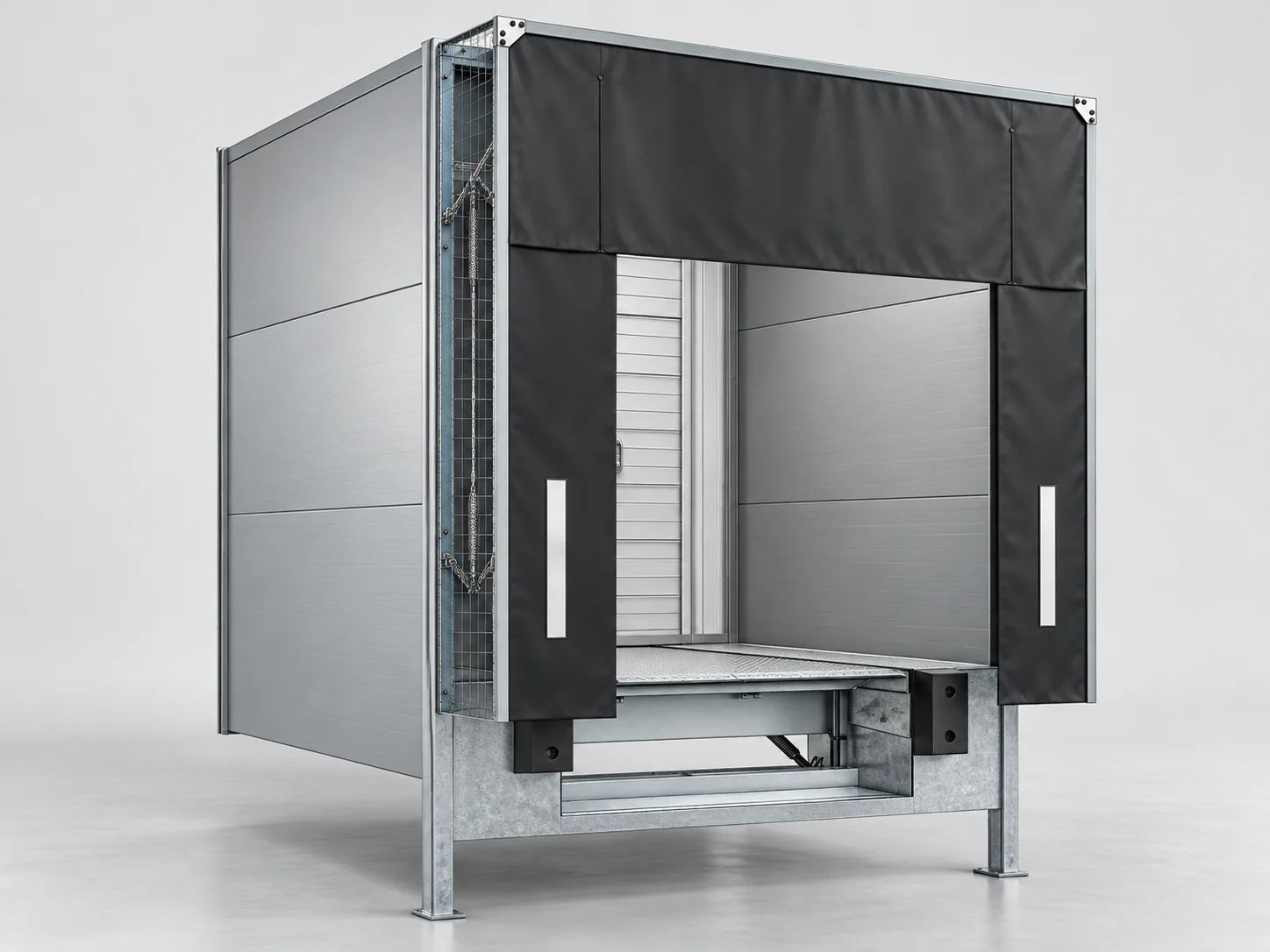 06Insulated Dock HousesA dock house moves the dock leveler into an insulated module outside the building, so the door, shelter and leveler work together in one structure without taking up interior space.
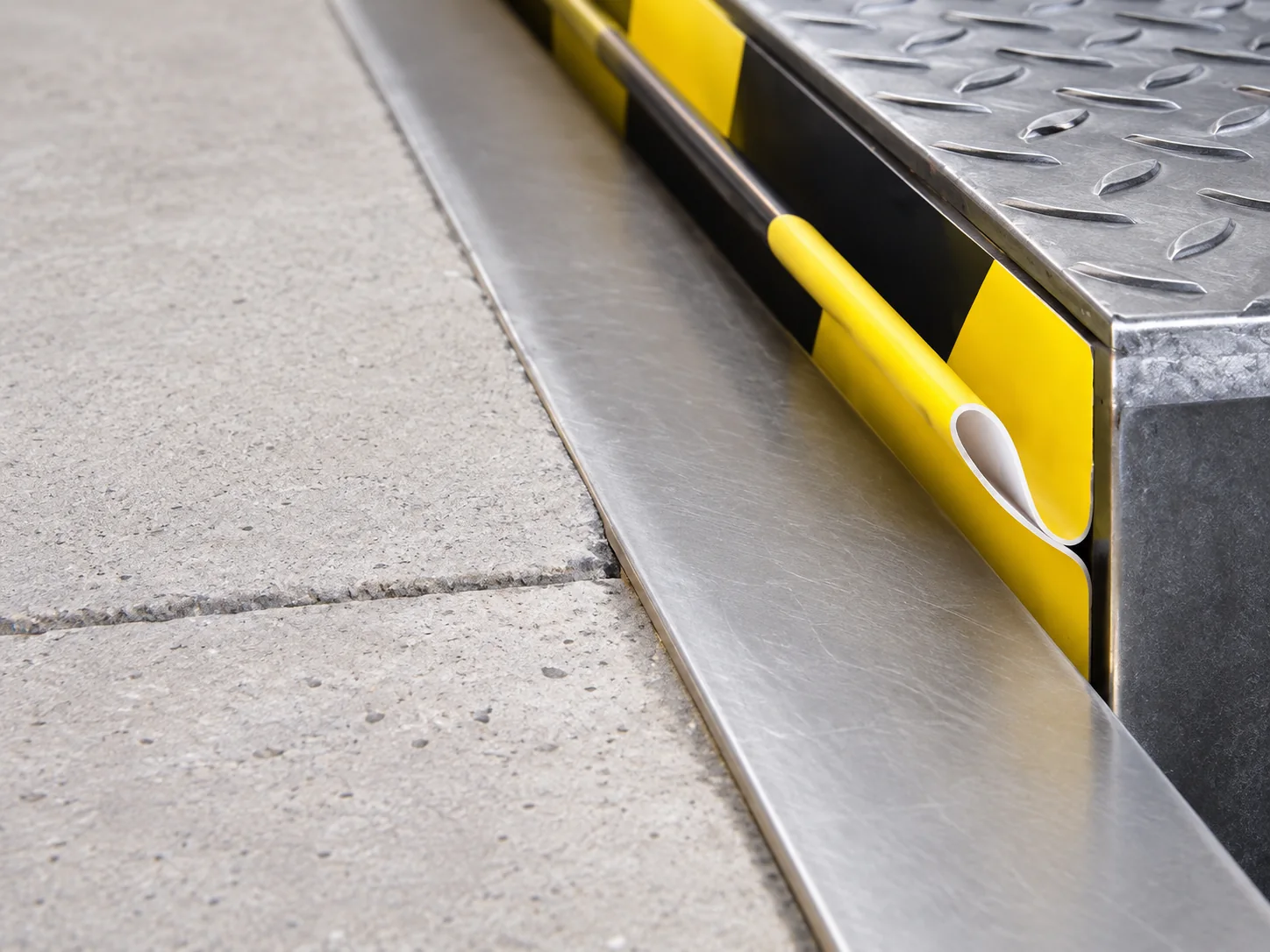 07Dock Gap SealsGap seals are flexible profiles that close the openings left between the vehicle and the dock and along the platform edges, limiting draughts, dust ingress and heat loss at the loading point.
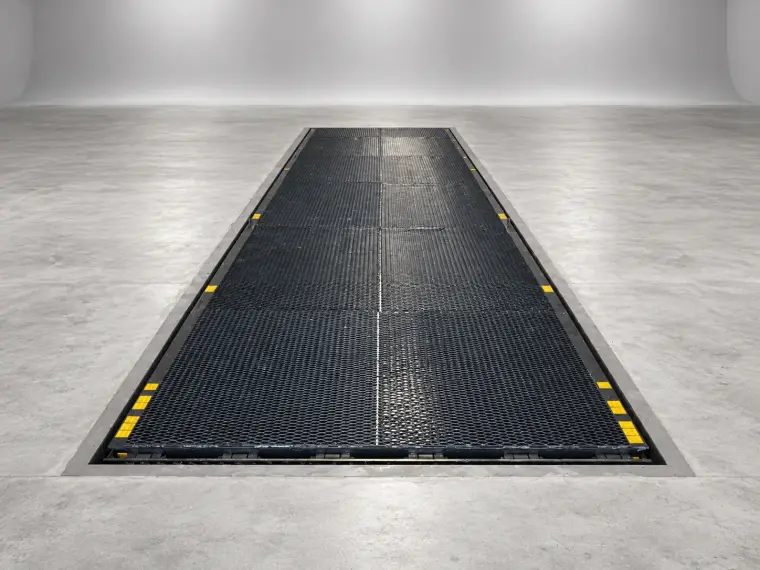
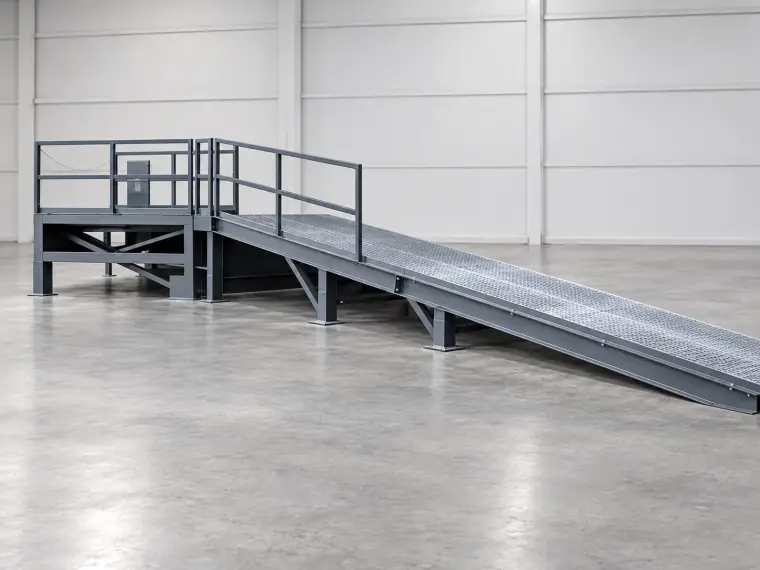
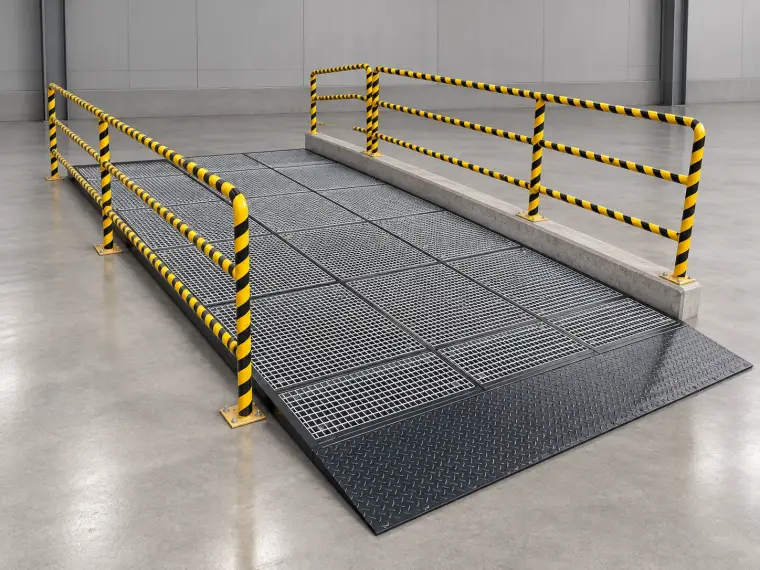
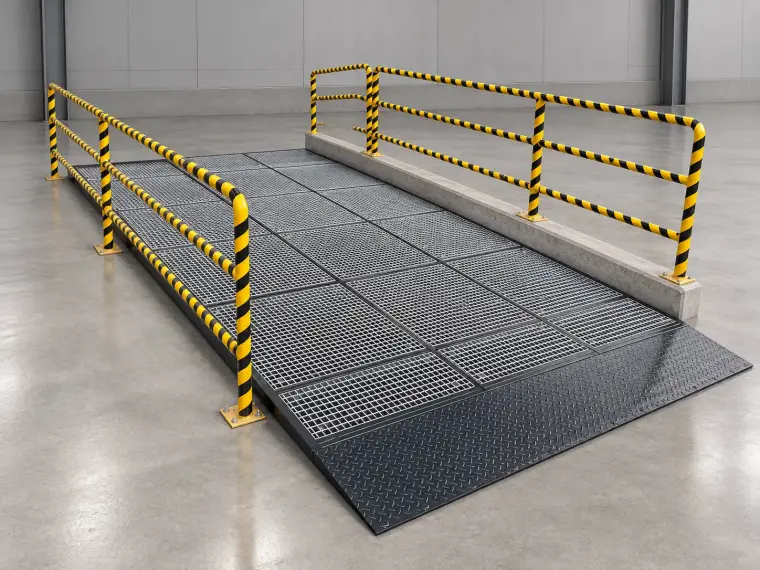
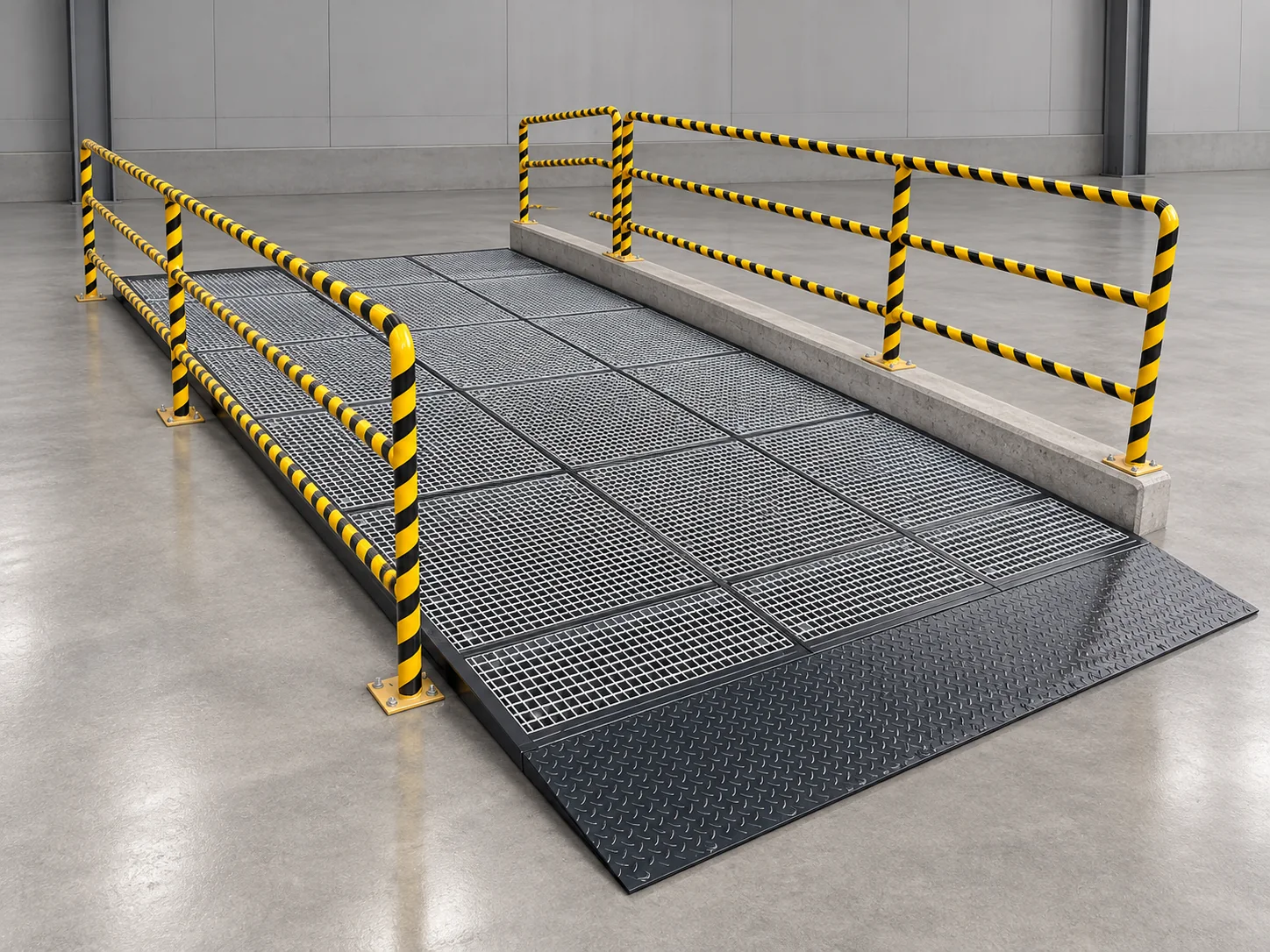 08Loading Area Floor and Surface CoveringsPlate, coating and cleaning surface options that protect the floor at busy points such as the dock apron, leveler deck and hall entrance, and reduce the dirt carried in on wheels.
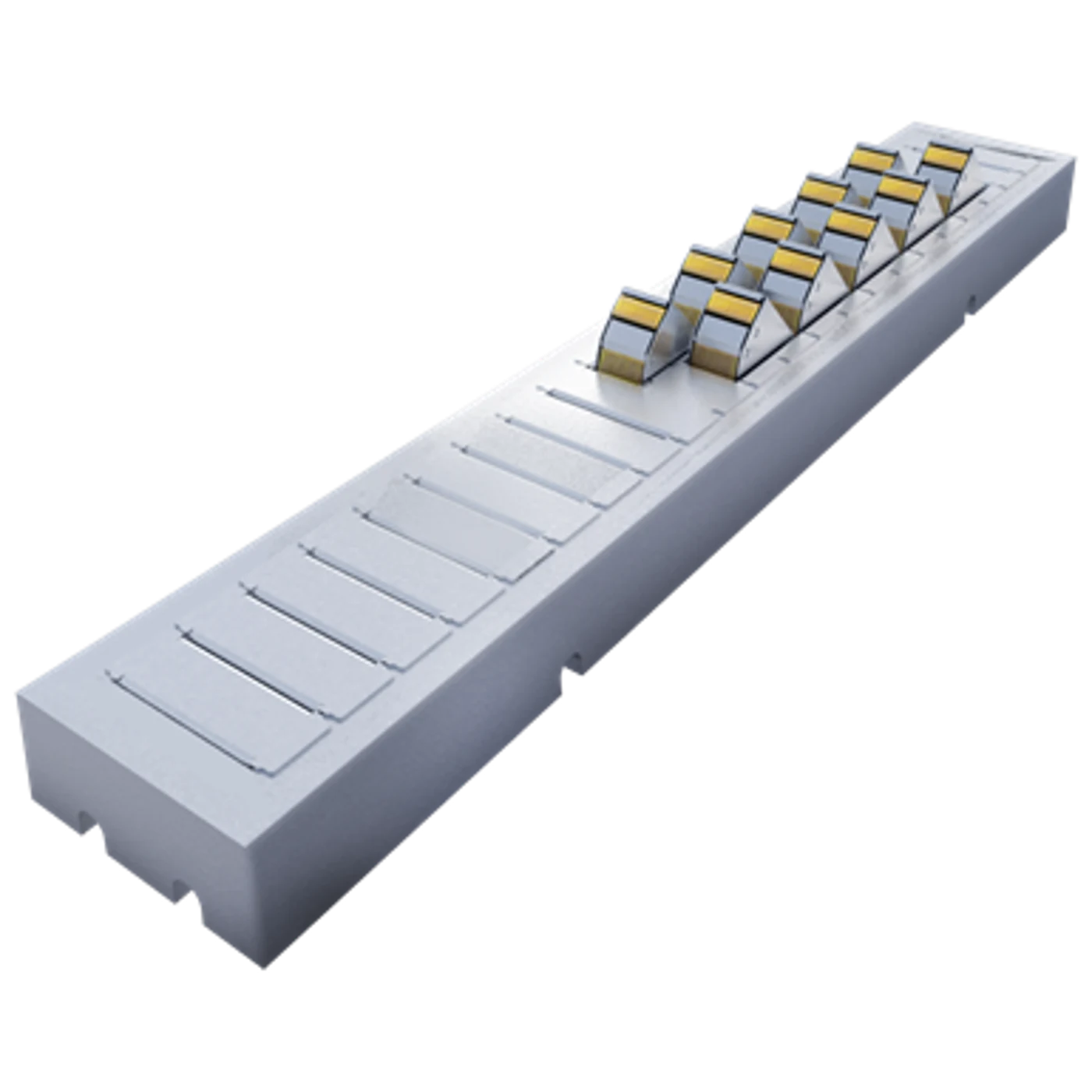 09RFID Vehicle and Equipment IdentificationRFID systems support the identification of vehicles entering the site and equipment used on it; the access and tracking setup is planned together according to how your facility operates.
Where does safety start at the loading point?
Safe loading begins as the vehicle approaches the door and continues until it leaves the area. During this time the vehicle must be aligned correctly and stay in place while loading, the building and dock must be protected from impacts, and the driver and operator must see the same information.
The equipment in this group is chosen not item by item but as parts of one working scenario. Wheel guides direct the vehicle to the loading point, dock bumpers protect the contact zone and LED warning lights show the operating status, while Calematic and the electronic wheel chock help keep the vehicle stationary during loading.
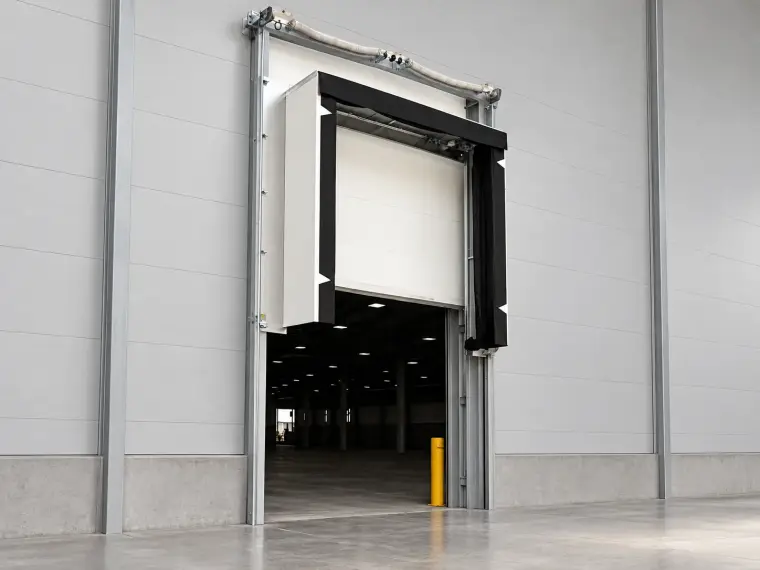
Loading houses, gap seals, floor coatings and RFID systems complete the group. Details of each sub-product can be found in the product cards below.
Correct approach
Floor-mounted guides align the vehicle with the door axis and reduce docking at the wrong angle.
Controlled restraint
Systems acting on the wheel area help prevent the vehicle from moving during loading.
Visible operating status
Red and green signals show the driver and site staff when to wait and when to move.
Protecting the structure
Bumpers take the contact load between the vehicle, the dock and the building facade.
Product images
Image gallery
21Click an image to move through the gallery.
When selecting equipment
- Plan the driver waiting point, staff walking routes and forklift traffic together.
- Clarify the emergency stop arrangement and where warning signals will be seen from before installation.
- Define mounting points for guides, bumpers and warning equipment based on the existing facility dimensions.
- For vehicle restraint systems, assess the need to link with door and leveller control at an early stage.
Questions about safety equipment
Can safety equipment be added to an existing dock?
In many installations it can. Connection details, electrical infrastructure and the operating logic of existing equipment are checked before installation.
Which equipment should come first?
That depends on the main risk on site. Guides come first for docking problems, restraint systems for vehicle movement risk and LED warnings for visibility issues.
Can the equipment work together with the door and leveller?
Systems such as Calematic can be integrated into the loading process with control options linked to door position. Suitability is reviewed per project.