













Loading Safety · Vehicle Restraint
Electronic Wheel Chock with Sensor
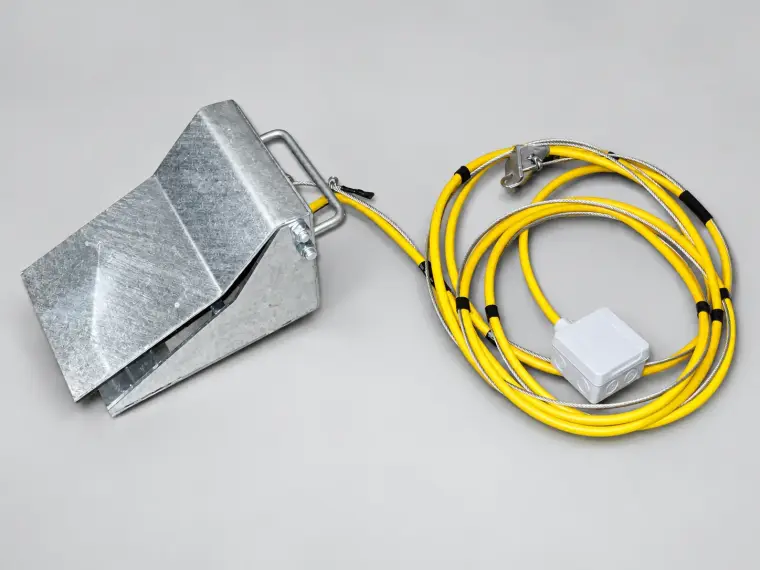
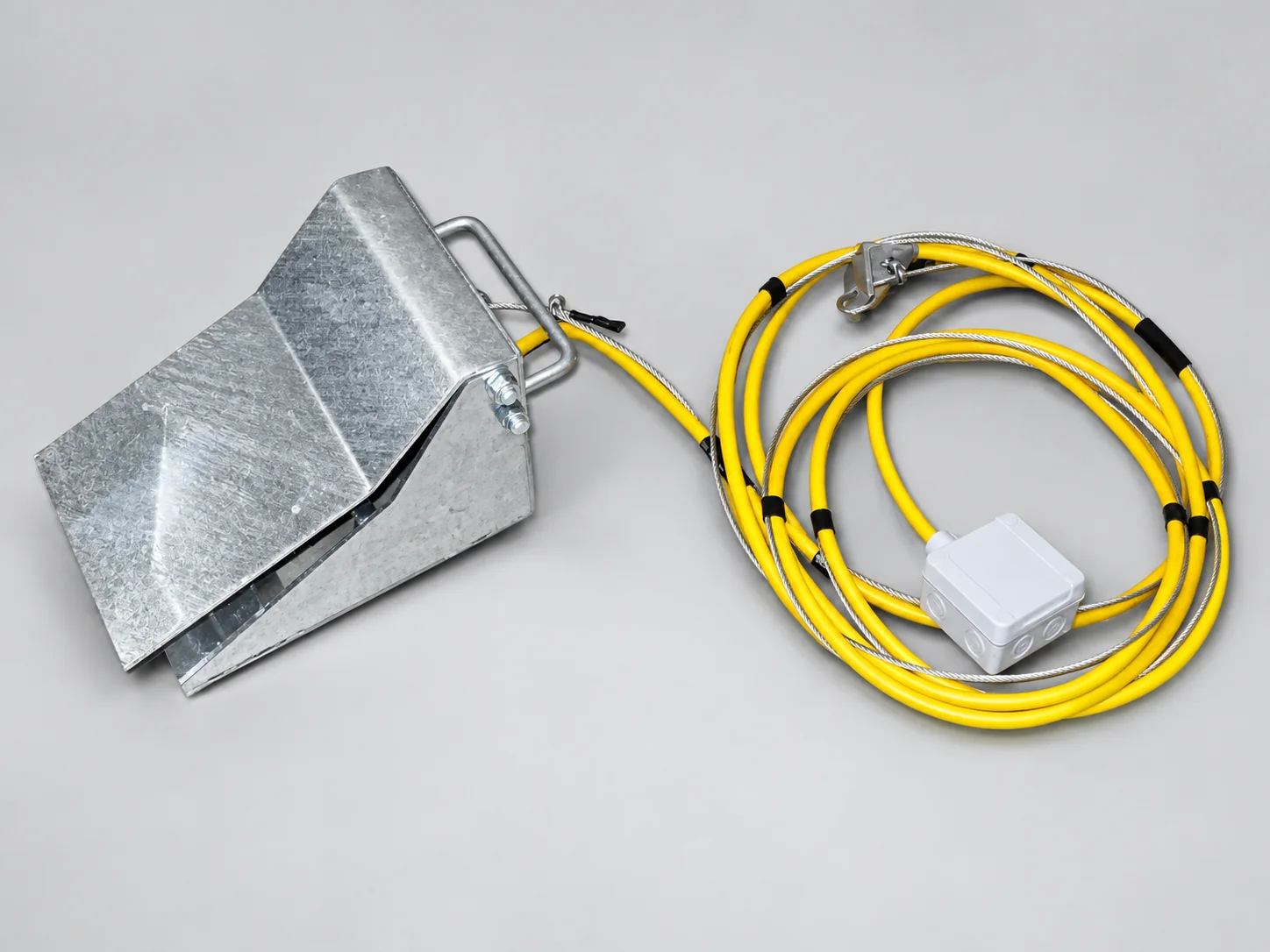
The electronic wheel chock detects by sensor that it has been placed in front of the trailer wheel and reports this to the dock operator, adding an extra layer of control against unexpected movement of a docked vehicle.
- Category
- Dock Safety Systems
- Product group
- Dock and Loading Safety Systems
- Origin
- Çorlu / TR
What does an electronic wheel chock change at the dock?
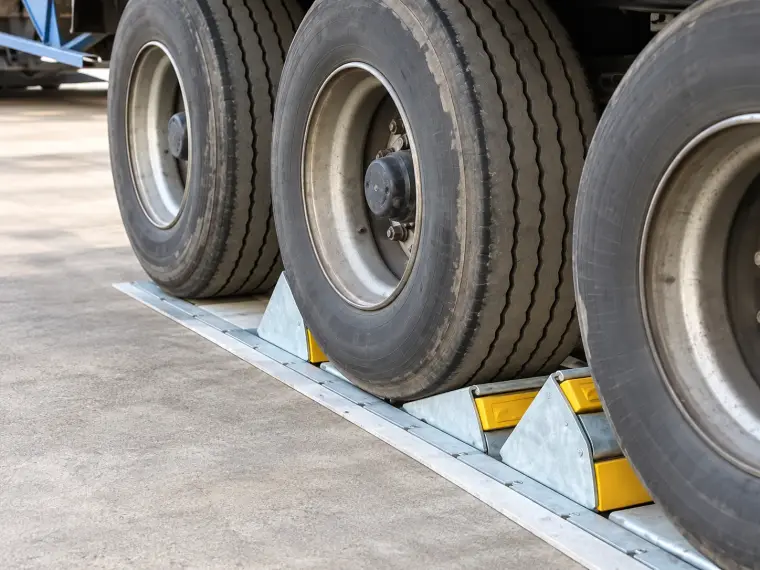
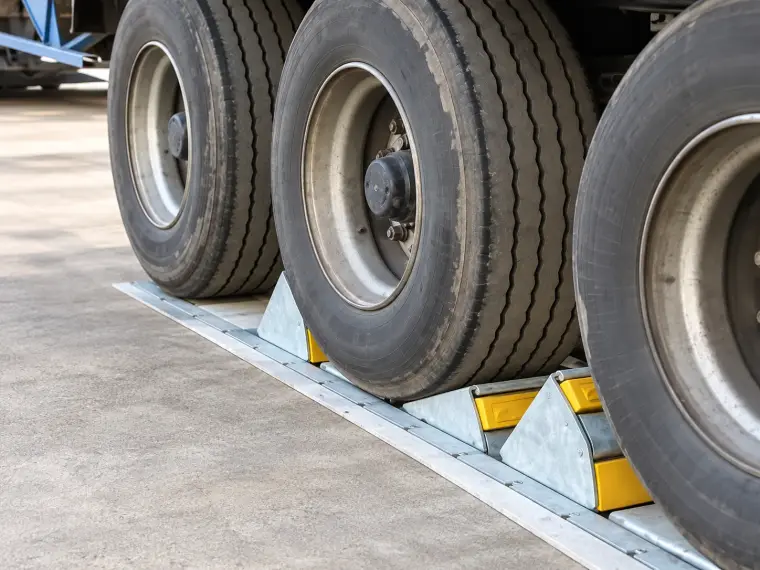
A conventional chock only stops the wheel; the operator still has to walk outside to see whether it is actually in place. The electronic wheel chock uses a sensor in its body to detect contact with the tyre and reports that status to the control setup at the loading point.
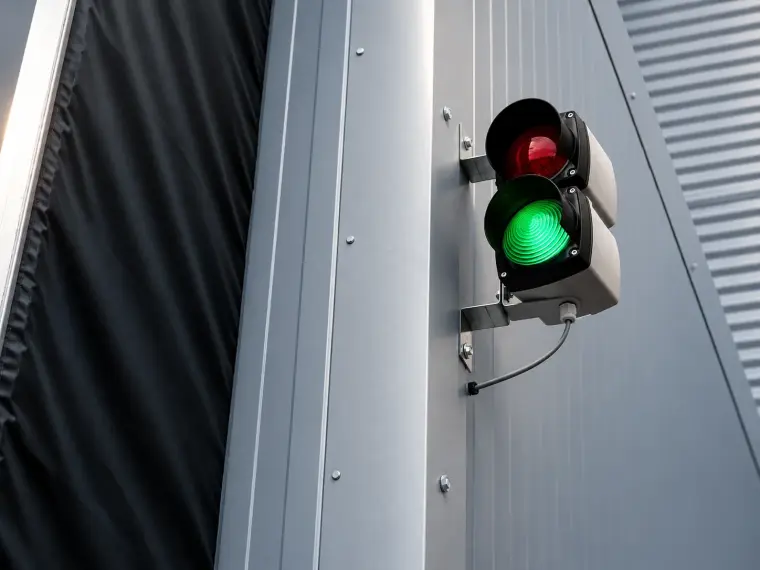
The signal can travel by cable or by RF. The chock position can then be considered together with dock and door movements; for example, an LED signal light can give visual feedback to the driver and the forklift operator.
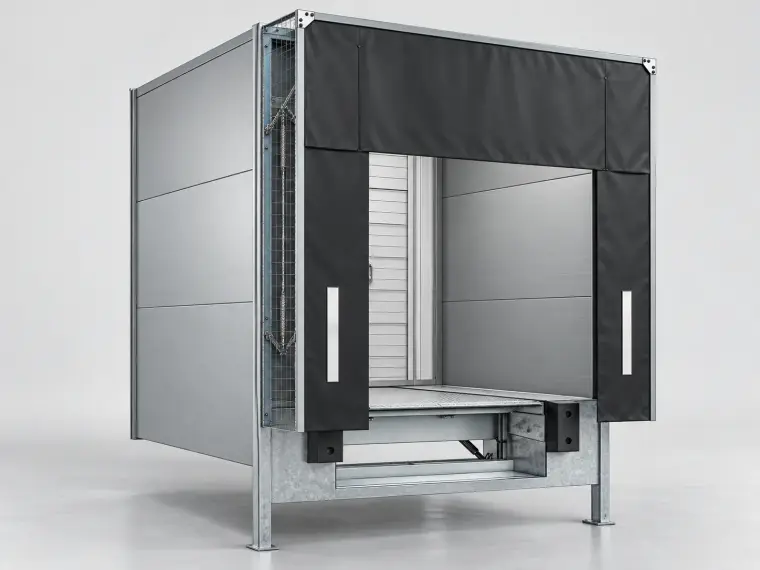
It suits busy warehouses, distribution centres and multi-door logistics sites. See loading safety systems for complementary equipment.
Position confirmed by sensor
A magnetic or optical sensor detects whether the chock is touching the tyre, so the check does not rely on a glance.
Wired or wireless signal
Depending on site infrastructure, the signal is carried by cable or over an RF link.
Body built for outdoor use
The PE / PU body and IP65 protection class were chosen with open dock aprons in mind.
Low-voltage supply
It runs on 24 V DC, which makes integration with existing dock controls easier.
Technical values
- Body material
- PE / PU
- Detection type
- Magnetic or optical
- Signal transmission
- Wired or RF
- Operating voltage
- 24 V DC
- IP protection
- IP65
- Dimensions
- 300 × 250 × 200 mm
Sensor type and transmission method are defined according to the dock control infrastructure; the exact configuration is confirmed with the quotation.
Site and product images
Image gallery
12Click an image to move through the gallery.
Points to consider during installation
- Choose a holder or post position in front of the dock that the driver can reach easily.
- Route the cable so that vehicle tyres cannot run over it; if the infrastructure is not suitable, RF transmission can be considered.
- Decide between a magnetic and an optical sensor together with the existing control panel and signal setup.
- During periodic checks, inspect the body surface and the cable connection, and repeat the detection test on site.
Frequently asked questions
Where does the chock-in-place signal go?
The sensor signal is sent by cable or RF to the control setup at the dock. It can be used together with equipment such as a signal light.
What voltage does it need?
The product runs on a 24 V DC supply.
Can it be used in rain and dust?
The body has an IP65 protection class; use on an open loading apron is assessed against this value.
Where is the chock kept when not in use?
As shown in the images, it can be stored beside the dock on a wall holder, a hook or a free-standing post.